Fintech product engineering / Product development showcase

Cryptose

Mobile journeys and operational tools for a payment product.

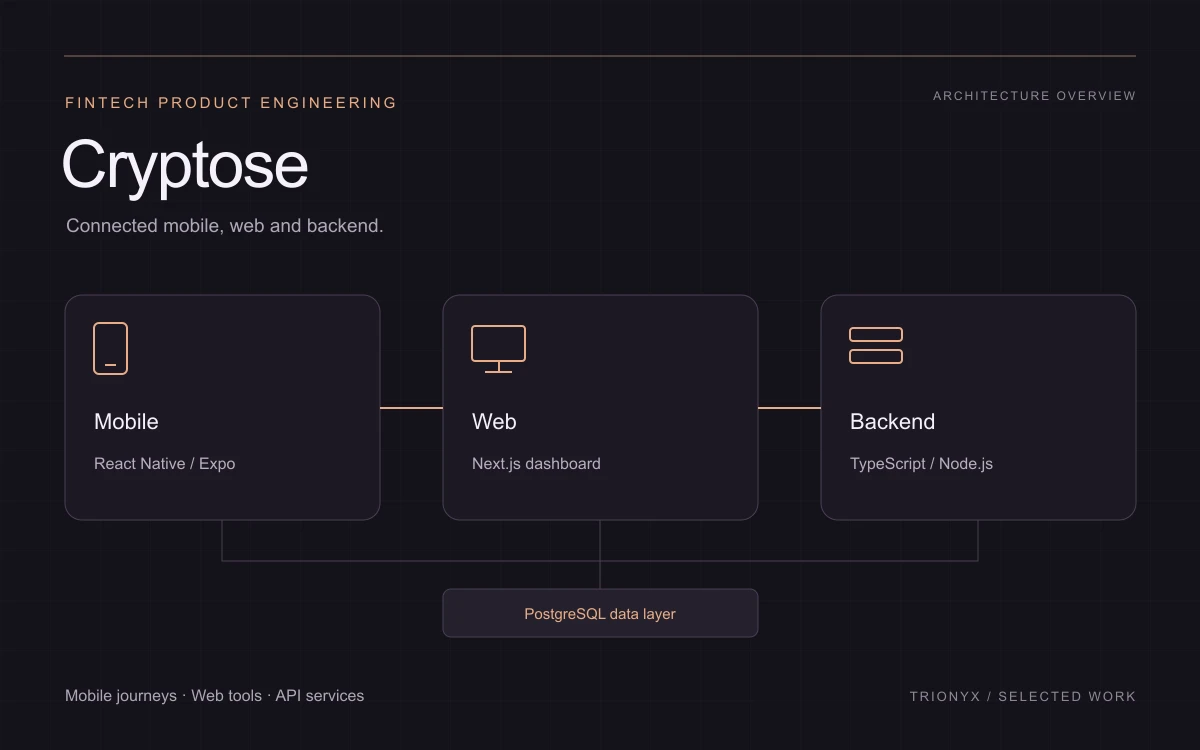
Cryptose demonstrates a multi-application product architecture: mobile experiences, an authenticated web workspace and a dedicated backend. It is featured here for full stack engineering; its mobile application uses React Native/Expo, rather than Flutter.

  • React Native / Expo
  • Next.js
  • TypeScript
  • Hono / Node.js
  • PostgreSQL
Discuss a similar project ↗
Cryptose: React Native / Expo mobile experience connected to a web workspace and backend
Application architecture illustration. Project overview; no customer records or operating metrics shown.

01 / The product context

A workflow that reaches beyond one screen.

Payment-oriented products need coherent user journeys and supporting operational tools. Cryptose brings mobile screens, account and transaction-related interfaces, web administration and backend services into one product workspace. This page describes the engineering scope, not a financial service offer or a claim of payment-provider approval.

02 / Connected capabilities

What the product brings together.

Mobile account and payment journeys

The React Native/Expo application includes account, wallet-related and QR-based payment interfaces. These journeys require clear input, loading, review and failure states. The mobile framework is stated explicitly so this example can be evaluated accurately alongside the Flutter projects.

Web dashboard and administration

The Next.js web application provides a separate authenticated workspace. User-facing mobile flows and operational screens serve different tasks, while relying on shared backend services and a consistent understanding of account and transaction state.

Backend services and background work

A TypeScript API built with Hono and Node.js sits alongside database access and worker infrastructure. The architecture separates request handling from background processing, a useful consideration for products with updates that continue beyond a single screen interaction.

Connected application architecture

The repository organizes mobile, web and API applications in a shared workspace. This allows the product to have distinct deployment and interface needs while making boundaries between applications explicit.

03 / Engineering considerations

The connections
matter as much
as the screens.

Choose the mobile stack for the product

This example uses React Native/Expo. Valmont and Workpilot provide the Flutter references. Framework choice should follow the team, device features, integrations and maintenance requirements of the actual project.

Make state visible across surfaces

A transaction-related product needs understandable states in the mobile journey and the operational workspace. A comparable project should scope how those states are presented, reviewed and updated before expanding the number of features.

Keep engineering and launch requirements distinct

Working interfaces and backend modules are one part of a payment product. Provider onboarding, legal and compliance review, operational readiness and release approval are separate requirements. This development showcase does not imply those approvals or a verified live payment outcome.

Your project / A practical starting point

Planning a connected business product?

A relevant example for founders evaluating a connected mobile, web and API product. Discuss your user journey, operating model and integration requirements first. Financial and other regulated products also need appropriate independent review before launch.